
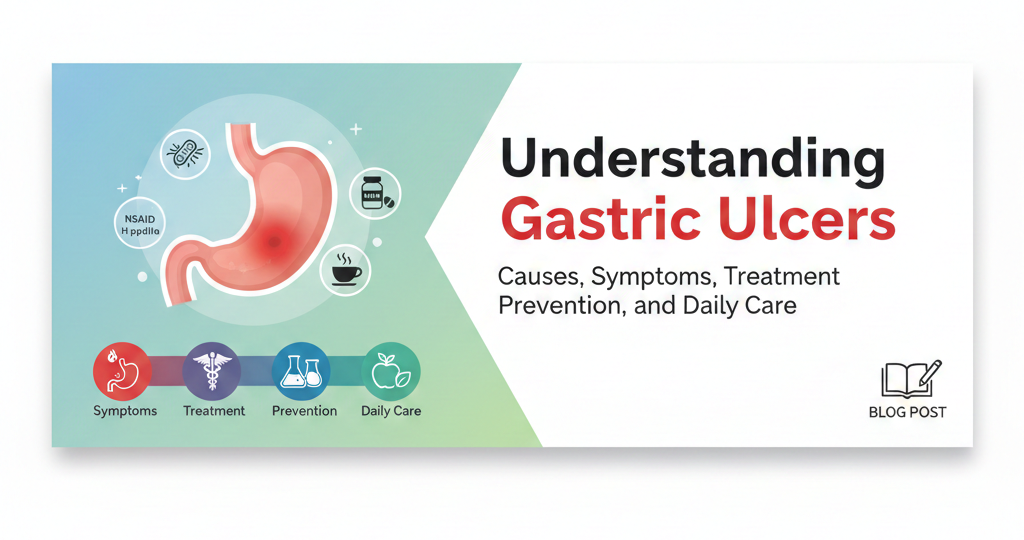
Understanding Gastric Ulcers.
A gastric ulcer is an open sore that forms on the inner lining of the stomach. It belongs to a group of conditions known as peptic ulcer disease. Gastric ulcers develop when the stomach’s natural protective lining is weakened or damaged, allowing stomach acid to irritate and injure the tissue beneath. When this balance is disturbed, pain, inflammation, and bleeding can occur.
What Causes Gastric Ulcers
Several factors can damage the stomach lining and lead to ulcer formation. The most common causes include Helicobacter pylori (H. pylori) infection, a bacterium that weakens the stomach’s protective mucus layer and increases acid injury. Long-term or frequent use of pain relievers such as aspirin, ibuprofen, or naproxen (NSAIDs) is another major cause, as these medications reduce the stomach’s ability to protect itself from acid.
Other contributors include excess stomach acid, severe physical stress or illness, smoking, and excessive alcohol use. Often, more than one factor is involved.
Common Symptoms of Gastric Ulcers
Symptoms vary from person to person, but many people experience a burning or gnawing pain in the upper abdomen. This pain may worsen after eating, especially with acidic or spicy foods. Other common symptoms include nausea, vomiting, bloating, feeling full quickly, loss of appetite, and unexplained weight loss.
Some symptoms are dangerous and require immediate medical attention. These include vomiting blood, black or tarry stools, and severe or persistent abdominal pain. These signs may indicate bleeding or perforation, which are medical emergencies.
How Gastric Ulcers Are Diagnosed
Doctors diagnose gastric ulcers using several methods. An endoscopy allows direct visualization of the stomach lining using a small camera. Tests such as breath, blood, or stool tests are used to detect H. pylori infection. In some cases, imaging tests may be ordered to assess complications or rule out other conditions.
Treatment and Healing
Treatment depends on the underlying cause. If H. pylori is present, antibiotics are prescribed to eradicate the infection. Acid-reducing medications, such as proton pump inhibitors (PPIs) or H2 blockers, are commonly used to reduce stomach acid and allow healing. Avoiding NSAIDs is critical if painkillers contributed to the ulcer. Lifestyle changes—such as stopping smoking, limiting alcohol, and improving diet—are also essential.
With proper treatment, most gastric ulcers heal completely.
How Long Does Healing Take
Healing takes weeks, not days. With proper treatment, most gastric ulcers heal within 6 to 8 weeks. If the ulcer is caused by H. pylori, improvement often begins soon after antibiotics are started, but it is essential to complete the full course. When NSAIDs are the cause, healing improves after stopping the medication and continuing acid suppression.
Without treatment, ulcers can worsen, bleed, or perforate, becoming life-threatening. Even if pain improves early, the ulcer may still be present—treatment must be completed as prescribed.
Diet: Foods to Eat and Foods to Avoid
Food choices significantly affect healing and recurrence.
Foods that support healing include boiled or steamed vegetables, oatmeal, rice, and whole grains, bananas and non-acidic apples, lean proteins such as fish, chicken, and eggs, yogurt with probiotics (if tolerated), and warm water or herbal teas.
Foods to avoid include alcohol, spicy foods, fried or fatty foods, coffee and strong tea, carbonated drinks, chocolate, citrus fruits, and tomatoes or tomato-based products. The key principle is to eat small, frequent meals and avoid eating late at night.
Warning Signs That Need Urgent Medical Care
Seek immediate medical help if you experience vomiting blood, black or tarry stools, sudden or severe abdominal pain, persistent vomiting, dizziness or fainting, or unexplained weakness or fatigue. These may indicate bleeding or perforation and require urgent care.
Preventing Gastric Ulcer Recurrence
Preventing recurrence requires addressing the cause and maintaining healthy habits.
First, treat the root cause completely. Always finish antibiotics for H. pylori and confirm eradication if advised. Avoid regular use of NSAIDs unless prescribed and monitored.
Second, protect the stomach from acid. Take acid-reducing medications exactly as prescribed, avoid late-night meals, eat smaller portions more frequently, and do not lie down immediately after eating.
Third, avoid ulcer triggers such as alcohol, smoking or vaping, excess caffeine, and spicy or acidic foods. Even small amounts can restart irritation.
Fourth, manage stress properly. While stress alone may not cause ulcers, it worsens symptoms and delays healing. Adequate sleep, relaxation practices, prayer or meditation, and avoiding prolonged emotional strain are important.
Fifth, eat a stomach-friendly diet long term. Emphasize non-acidic fruits, vegetables, whole grains, probiotics if tolerated, and adequate hydration—without overeating.
Sixth, use pain medications wisely. Prefer acetaminophen (paracetamol) over NSAIDs when possible, never take painkillers on an empty stomach, and follow medical advice carefully.
Seventh, attend follow-up appointments. Confirm healing if recommended, repeat H. pylori testing when necessary, and report recurring symptoms early.
Finally, watch for early warning signs such as returning stomach pain, nausea, bloating, or appetite loss. Do not ignore mild symptoms—they often come before relapse.
A Simple Daily Meal Plan for Gastric Ulcer Care
A consistent, gentle meal routine supports healing and prevention.
Early Morning: One glass of warm water. Optionally, plain oatmeal water or light non-caffeinated herbal tea.
Breakfast: Choose one—oatmeal with water or low-fat milk and sliced banana; boiled eggs (1–2) with plain whole-grain toast; or pap (ogi/akamu) or cream of wheat taken warm. Avoid coffee, spicy seasonings, and fried foods.
Mid-Morning Snack: Banana or non-acidic apple; low-fat yogurt with probiotics if tolerated.
Lunch: Choose one—boiled rice with steamed vegetables and grilled or boiled chicken or fish; boiled yam or potatoes with mild vegetable sauce (no pepper, low oil); or whole-grain bread with boiled eggs or plain tuna. Drink water only.
Afternoon Snack: Plain crackers or digestive biscuits; a small handful of nuts (not spiced); or light chamomile or ginger tea.
Dinner: Eat at least three hours before sleep. Choose one—boiled plantain with vegetables and fish; lightly seasoned rice porridge without pepper; or vegetable soup with lean protein and minimal oil.
Before Bed (Optional): Warm milk if tolerated, or plain yogurt or oatmeal water.
Daily Rules: Eat small portions regularly, avoid extreme hunger, chew slowly, do not lie down after meals, and sip water throughout the day rather than drinking large amounts at once.
Final Takeaway
Gastric ulcers are serious but treatable and preventable. Healing requires patience, proper medication, careful food choices, stress control, and consistent habits. Ulcers often return when habits do not change—but they stay away when care is steady and disciplined.
Osoria Asibor